

Exploring the World of Marketing Funnels
The dos and definitely dos of this reliable marketing strategy
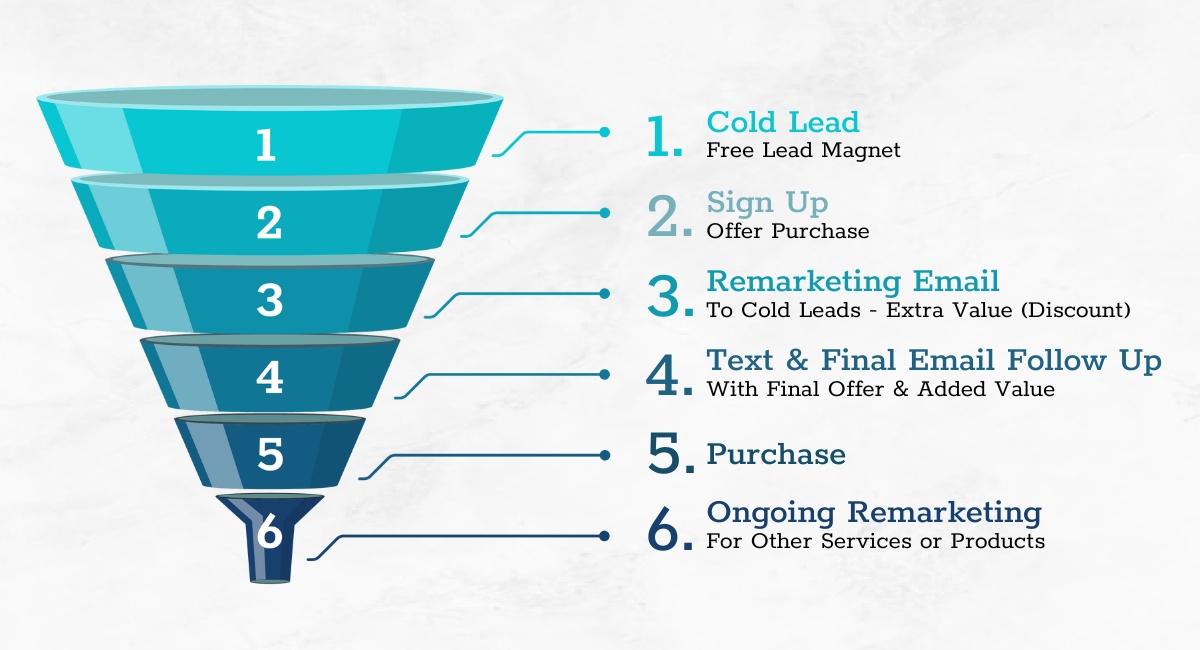
Let’s start by imagining what a funnel looks like. Think of the one you use to add oil or coolant to your car. Where do things go into that funnel? Right at the top, through the big opening. Now, picture your customers and cold leads as whatever you’re pouring into the funnel. Hopefully, this imagery helps you grasp the strategy right from the start.
The concept of funnels can be quite broad, but we’re here to provide straightforward guidance on the best tips to get started and how your marketing funnel can produce the results you’re aiming for!
Step #1: Identify the Goals
Before building a funnel, the best starting point is to identify the goals and conversion points for your marketing strategy. For example, if your end goal is to increase book sales, this will guide how you structure your funnel to achieve that result. It also sets clear expectations for your team and marketers about what you aim to accomplish. Additionally, this is a good time to identify which marketing platforms align with your objectives. Options range from Meta to TikTok and everything in between, but the nature of your service, funnel, or products will determine the best platforms to invest your budget in.
Next, outline the steps of your funnel. We highly recommend writing out each step of your marketing strategy to visualize the plan. This will help you identify weak points or strong points in your funnel both before and after its launch.
Step #2: The Juicy Bennies
Bennies = Benefits. A good funnel offers value. This is where you can get creative by developing downloadable resources or free-to-access content for your “cold leads” (we’ll discuss them in a moment). These resources will act as magnets to draw new data and potential customers into your funnel. When your ads promote a free perk or benefit, you increase the chances of your audience entering your funnel, allowing you to start the process of remarketing.
Typically, cold leads are those who submit their email, sign up, or participate in the initial step of your funnel. Most businesses aim to capture a name and email to start building a database of potential leads. This list can also be used in future marketing campaigns to create lookalike audiences and more!
Step #3: Remarketing & Sales
Once your audience starts flowing into the top of your funnel, you’ll need to have a remarketing journey prepared for them in advance. This could include follow-up marketing emails, text messages, invitations to webinars, and more. The goal is to stay top of mind and drive conversions toward the end of the funnel. This is another opportunity to get creative by offering discounts or special offers to further entice your audience.
Sales are never guaranteed, but you should rely on your data to identify what’s working and what isn’t, and adjust your funnel accordingly. Sometimes, a small tweak can significantly boost your sales. Follow. The. Data.
We Kept It Simple
We want this information to be easily digestible – that’s why we presented a basic overview with just three simple steps! Rest assured, there are many more ways to set up a funnel and numerous ways to make them more engaging and successful. Take this opportunity to reflect on your marketing goals, and if you need someone to brainstorm with, we’re right here ready to help!
Pro-tip: Successful marketing funnels typically utilize a strong budget of at least $1,500 per month (however, this can vary by industry). Lower investment levels can work, but have a higher probability of not producing cold leads.